
Brian Cory Dobbs
Filmmaker of the Mars disclosure record.
Background
Brian Cory Dobbs is an award-winning documentary filmmaker and independent researcher whose work centers on Mars and the broader case that paradigm-shifting space science is being suppressed. He works in a corner of the field very few people are willing to take seriously: the close, frame-by-frame examination of publicly released NASA imagery, looking for the artifacts and anomalies official scientific commentary has not engaged with. The discipline of the work is what gives it weight. He treats the data as the data and lets it lead.
Blue Planet Red
Brian is the director, editor, and screenwriter of Blue Planet Red, an award-winning documentary on the history and evidence for life on Mars, co-created with M.J. Craig. The film synthesizes decades of orbital and rover imagery alongside the institutional history of how NASA has and has not addressed it, building one of the most carefully sourced cases for Mars anomalies that has ever been put on screen. The reception in the independent-research community has been strong, and the film has become a reference point for serious discussion of the planet's visual record.
The Mars investigation
Brian's ongoing research examines specific features in the imagery: pyramidal structures, what appear to be stone circles, layered geological evidence consistent with a catastrophic past, and biological signatures that have surfaced in rover photography. Each anomaly is documented carefully, with the source frame, the coordinates where available, and the question of what would be required, evidentially, for it to be conclusively explained. The work is meticulous and patient, and the audience that has formed around it tends to be the kind that wants to see the source data rather than be told the conclusion.
The wider research
Beyond Mars, Brian's work touches on the broader pattern of space-science evidence that is in the public record but not in the public conversation. He treats the institutional silence around certain images and findings as itself a piece of data worth examining. The framing is consistent: the official version of events should be testable against the evidence, and where it is not, the gap deserves to be named.
Where to find him
Blue Planet Red is available at blueplanetred.net. Brian publishes ongoing research analysis on his YouTube channel at @briancorydobbs as an extension of the documentary, with new material appearing on a regular cadence. He is active on X at @BrianCoryDobbs where the latest Mars findings appear first.
Known For
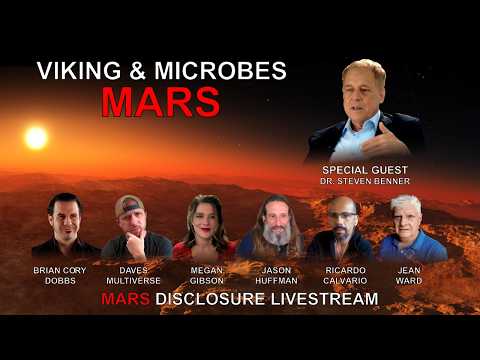
Frequently asked about Brian
- Who is Brian Cory Dobbs?
- Brian Cory Dobbs is Filmmaker of the Mars disclosure record. Brian Cory Dobbs is an award-winning documentary filmmaker and citizen researcher focused on Mars and the broader case for the suppression of paradigm-shifting space science. His work centers on what orbital and rover imagery actually shows, and on the gap between mainstream planetary narratives and the visual record itself.
- What is Brian Cory Dobbs known for?
- Brian Cory Dobbs is known for work in Mars Disclosure, Anomaly Hunting, Documentary Filmmaking, Planetary Catastrophism, Space Science.
- What is Brian's background?
- He is the director, editor, and screenwriter of Blue Planet Red, an award-winning documentary on the history and evidence for life on Mars, co-created with M.J. Craig. He hosts the Blue Planet Red YouTube channel as an ongoing extension of the film, examining anomalies, pyramids, stone circles, and catastrophe evidence on the red planet.
- Where can I find Brian's work?
- Brian Cory Dobbs's primary website is https://blueplanetred.net. Brian Cory Dobbs is part of TTN, the media network for deep history, science, and consciousness.
Also in the network
TTN’s creator network spans deep history, sacred geometry, cosmic-impact research, esoteric tradition, and the search for lost civilizations. Continue exploring: