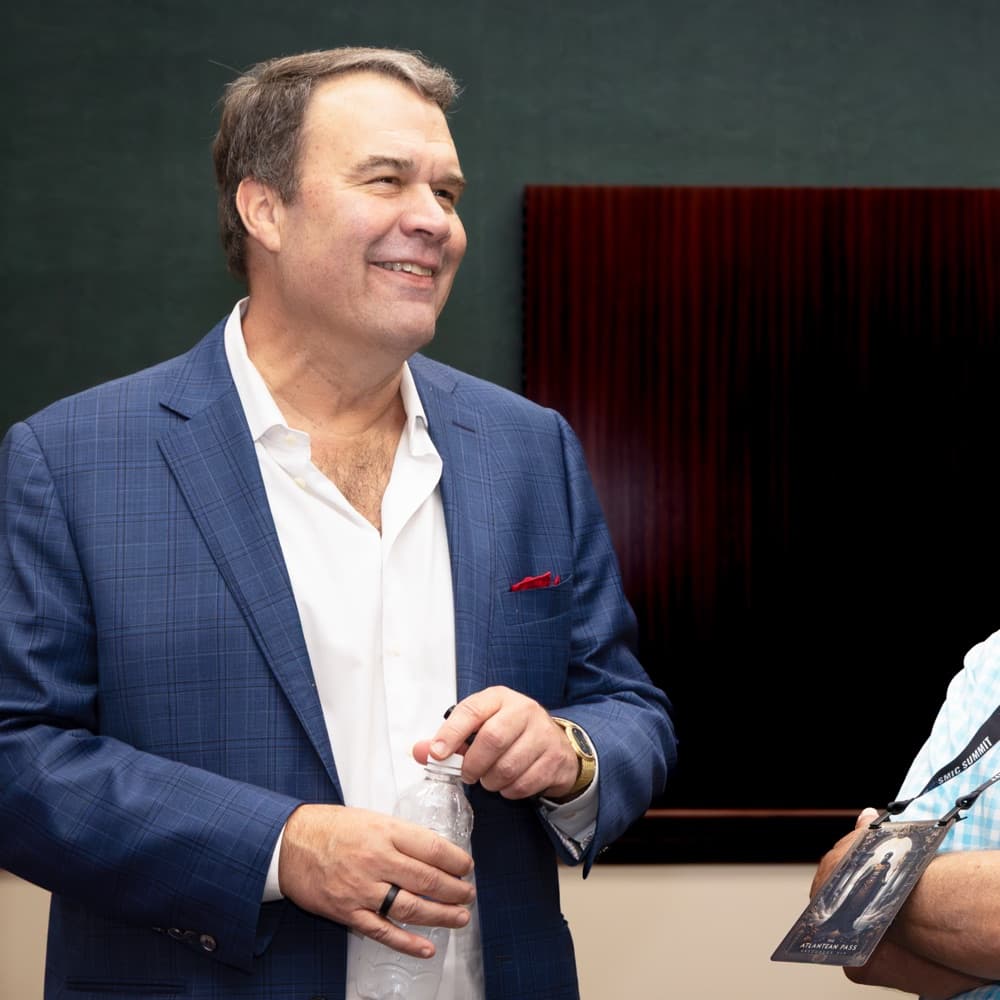
George Howard
Younger Dryas researcher, founder of Cosmic Summit.
Background
George Howard came to cosmic-impact research from an unusual direction. He started his career as a US Senate legislative aide before founding and running an environmental mitigation firm for more than two decades, sold in 2022. The conservation-finance work is what made the rest of his life possible: he has been able to fund and sustain one of the most important independent research and publication efforts in the catastrophist field for more than fifteen years, without depending on any institution.
The 2007 Younger Dryas paper
In 2007 George was a co-author of the original peer-reviewed PNAS paper proposing the Younger Dryas Impact Hypothesis, the theory that a fragmented comet struck the North American ice sheet roughly 12,800 years ago, triggering megafloods, mass extinctions, and the abrupt end of the Pleistocene. That paper opened a research program that is still active today, with scores of follow-up publications from the Comet Research Group. George was there at the beginning, and he has remained one of the most rigorous chroniclers of the evidence ever since.
The Cosmic Tusk
In 2008 George founded The Cosmic Tusk, a site and archive that has become the de facto online record of the YDIH evidence. He posts and annotates every significant paper, conference talk, and field finding related to the hypothesis as it appears. The site is read by the working scientists in the field as well as by the broader audience interested in the catastrophist case. Few independent sites in any scientific area have sustained this level of coverage for this long. The Cosmic Tusk Podcast is the audio extension of the same project, bringing the researchers and the evidence into long-form conversation.
Cosmic Summit
George is the founder of Cosmic Summit, the annual conference that brings together the academic researchers behind YDIH, the leading independent voices in the deep-history conversation, and the audience that follows both. The event has rapidly become one of the most important live venues for the cosmic-impact community, the bridge between the peer-reviewed science and the larger cultural conversation that has formed around it.
Where to find him
George publishes on cosmictusk.com, runs the Cosmic Summit annually, and hosts the Cosmic Tusk Podcast on Spotify, Apple Podcasts, and YouTube. He works closely with the Comet Research Group and a global network of scientists exploring the evidence for cosmic catastrophes in the prehistoric record. He maintains an active presence on X where he posts new YDIH research as it appears, and he remains the connective tissue between the working science and the wider audience that wants to understand it.
Known For

Frequently asked about George
- Who is George Howard?
- George Howard is Younger Dryas researcher, founder of Cosmic Summit. George Howard is the founder of Cosmic Summit, host of The Cosmic Tusk podcast, and a co-author of the original 2007 peer-reviewed paper proposing the Younger Dryas Impact Hypothesis. After a career as a US Senate legislative aide and as the founder of an environmental mitigation firm sold in 2022, he founded Cosmic Tusk Productions to advance research on cosmic impacts and lost civilizations.
- What is George Howard known for?
- George Howard is known for work in Younger Dryas Impact, Cosmic Catastrophes, Comet Research Group, Cosmic Summit, Carolina Bays.
- What is George's background?
- He works closely with the Comet Research Group and a global network of scientists exploring the evidence for cosmic catastrophes in Earth's prehistoric record.
- Where can I find George's work?
- George Howard's primary website is https://cosmictusk.com. George Howard is part of TTN, the media network for deep history, science, and consciousness.
Also in the network
TTN’s creator network spans deep history, sacred geometry, cosmic-impact research, esoteric tradition, and the search for lost civilizations. Continue exploring: